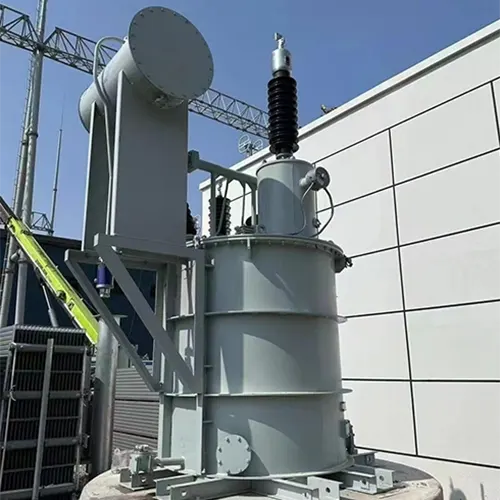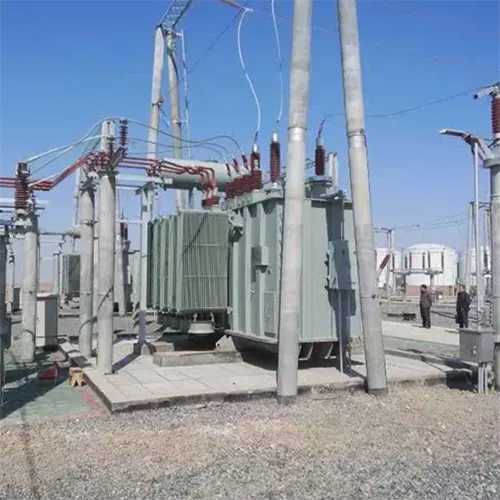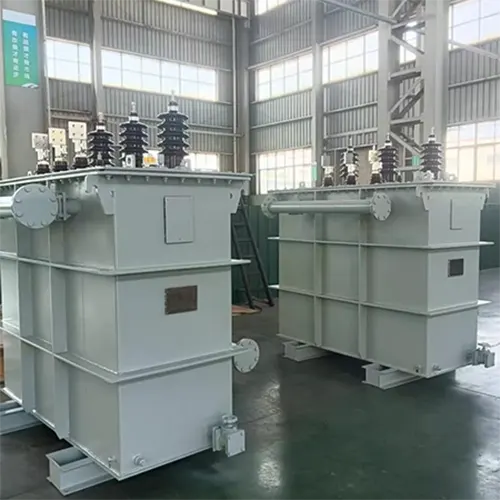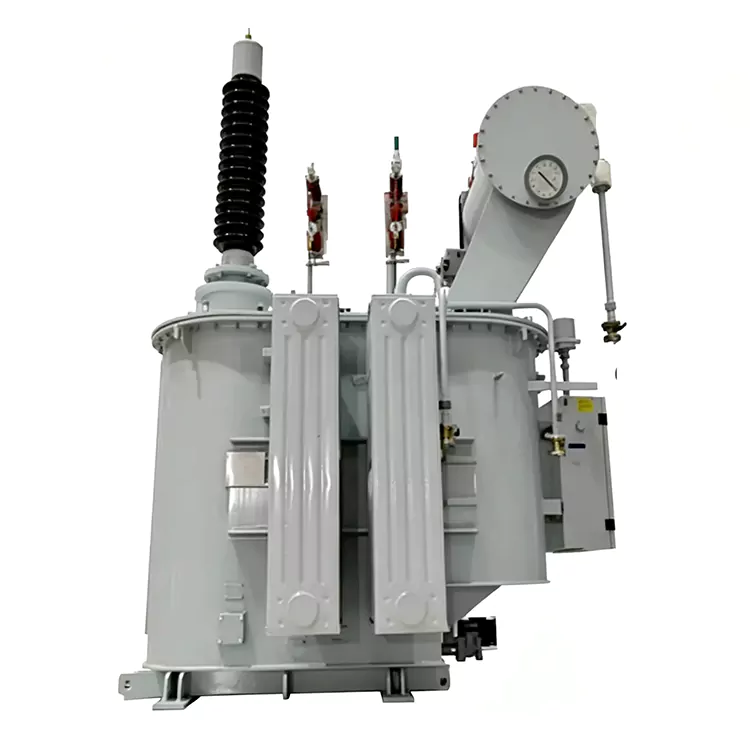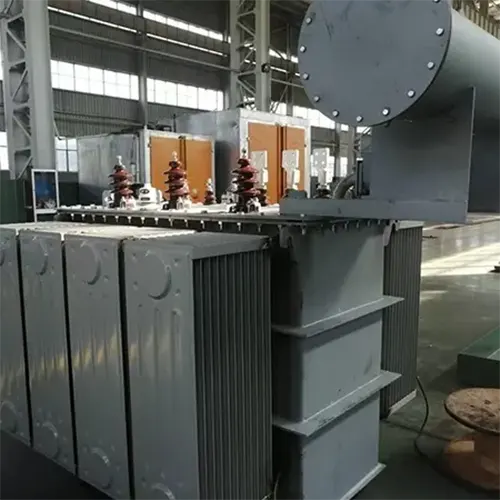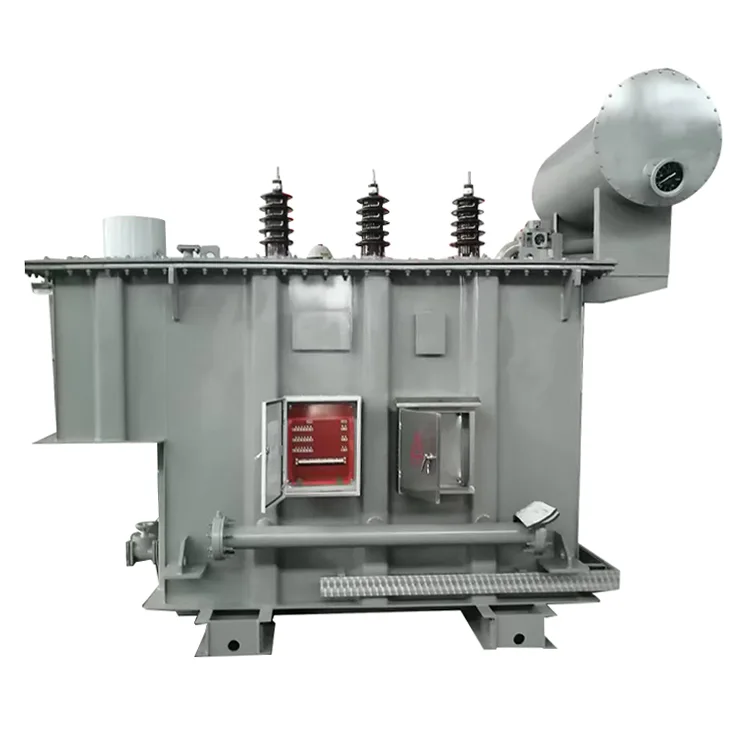
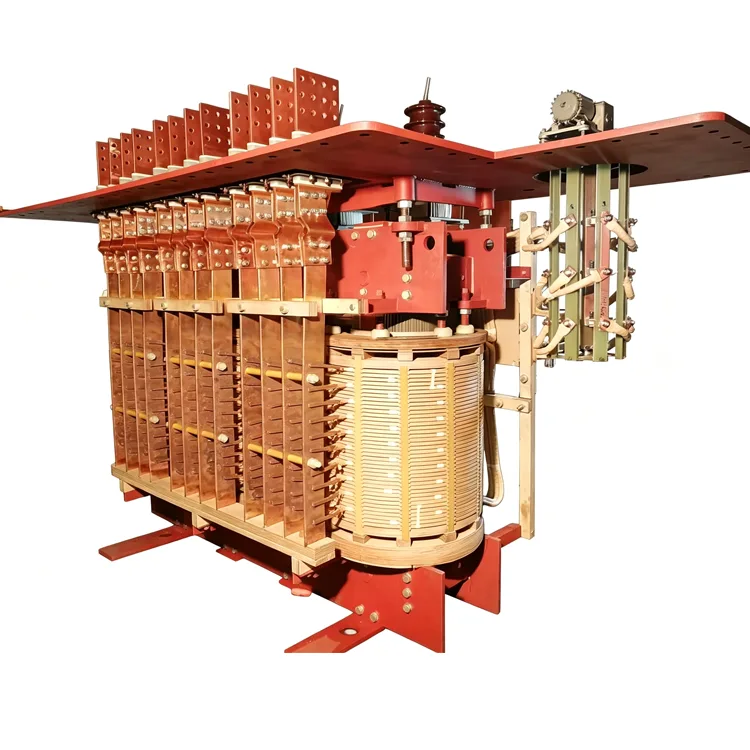
Arc Furnace Power Transformer
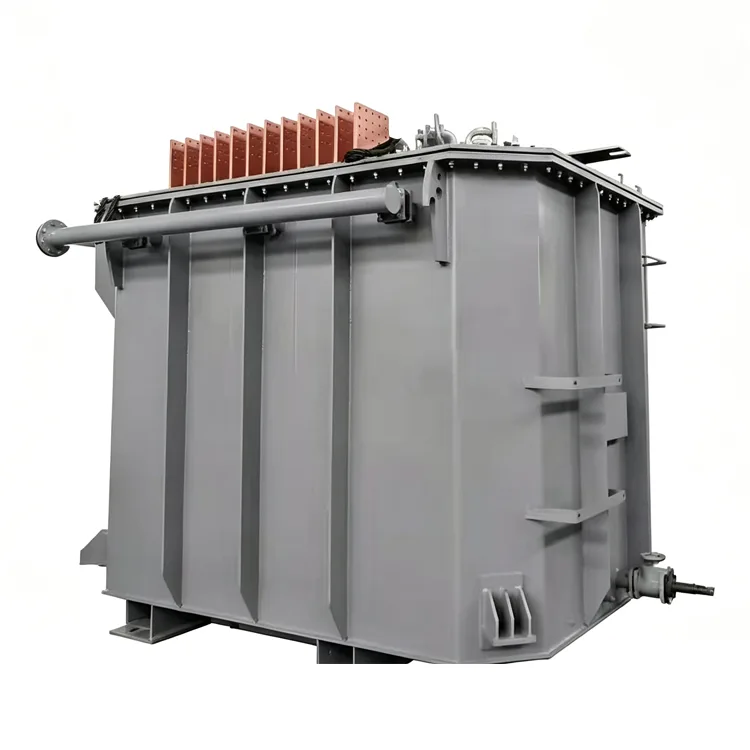
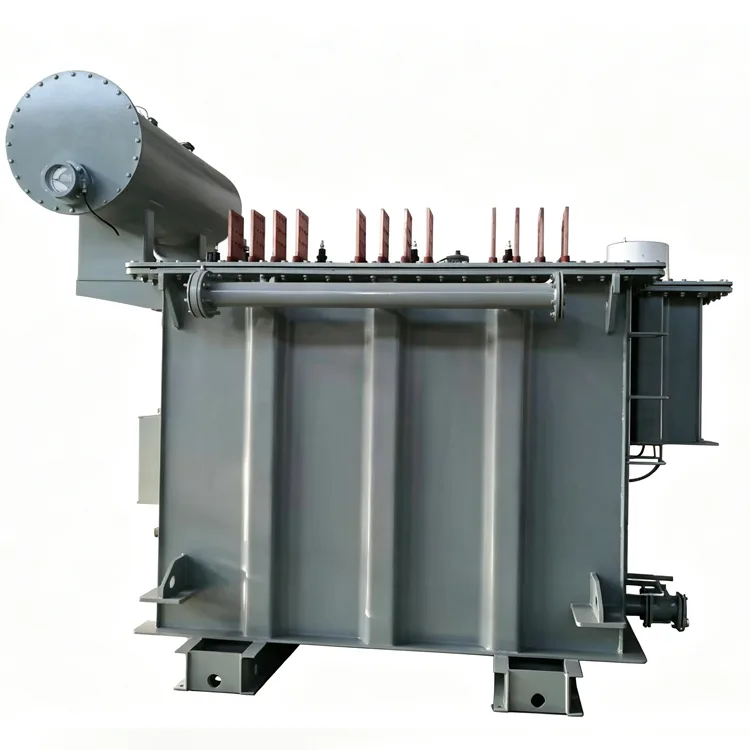
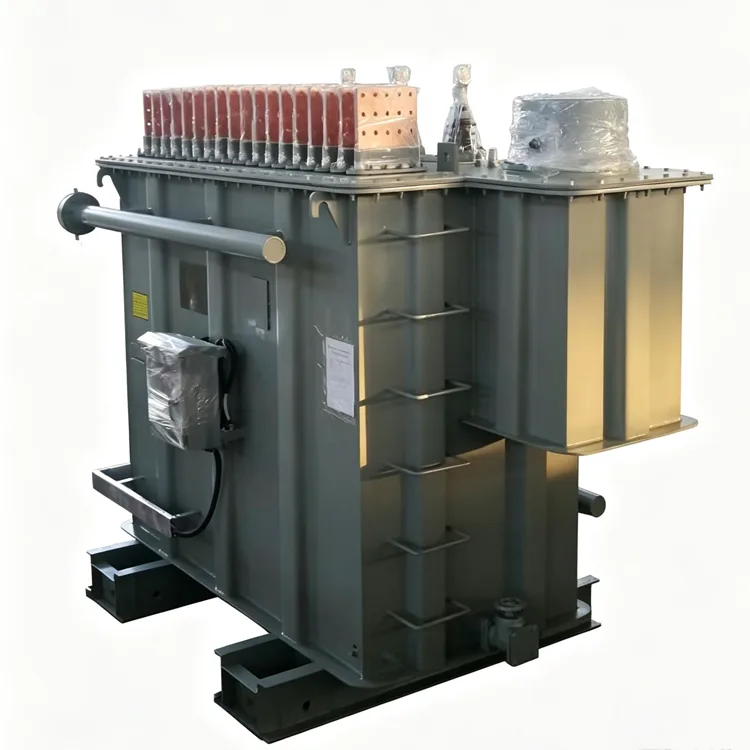
For demanding furnace operations, Yulan Transformer provides Arc Furnace Power Transformer solutions from 1,000 to 80,000 kVA, with 6–110 kV primary voltage and customized secondary parameters. Engineered for high current peaks and repeated short circuits. Source custom units, request a quote, or inquire today.
Arc furnace operation is among the most demanding duties for a power transformer. The load swings from open circuit to a condition close to a bolted fault within a fraction of a second, and this cycle repeats many times during a single heat. A transformer built for this service must handle extreme current peaks, strong electromagnetic forces, and frequent tap changes without losing reliability. Yulan Transformer supplies arc furnace power transformers from 1000 kVA to 80,000 kVA, with primary voltage options of 6 kV, 10 kV, 15 kV, 22 kV, 35 kV, and 110 kV. Design work follows IEC 60076, GB/T 10229, and the specific requirements of the furnace manufacturer.
Operating Conditions That Shape the Design
Unlike a distribution transformer that operates near rated load most of the time, an arc furnace transformer spends much of its life in transient conditions. The melting phase is particularly severe. Scrap shifts unpredictably, electrodes touch the charge, and the secondary current can exceed twice the rated value for short periods. These events are not faults in the traditional sense, but the transformer must survive them repeatedly over its entire service life.
The secondary side operates at low voltage, commonly between 100 V and 800 V depending on furnace size and process, while the secondary current can reach tens of thousands of amperes. This combination requires heavy conductor cross-sections, parallel winding branches, and robust lead support structures. The short-circuit impedance is also set higher than in standard transformers, often in the range of 6% to 12%, to limit current peaks and keep the arc stable.
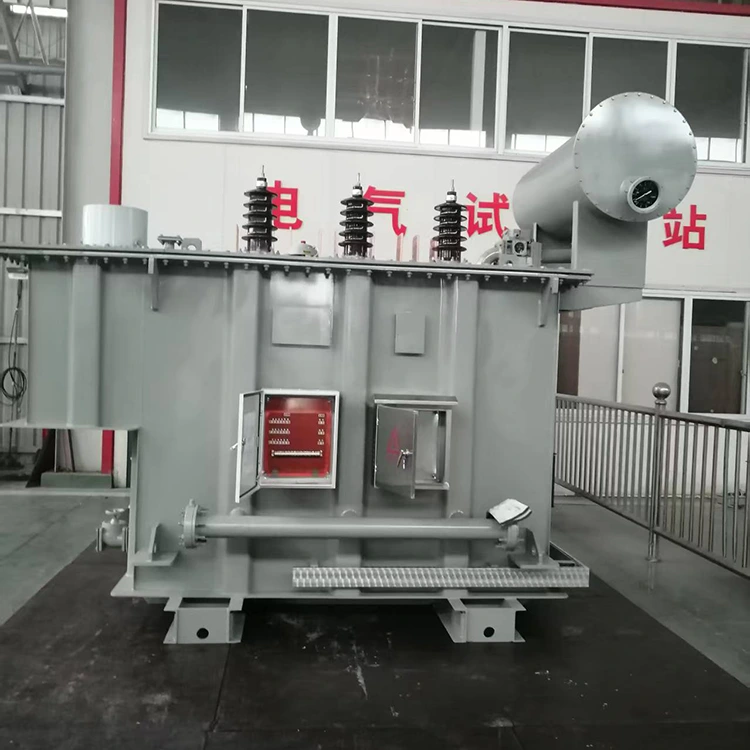
Design Approaches for Severe Duty
Arc furnace power transformers are built around several core decisions that affect performance and service life.
Winding arrangement
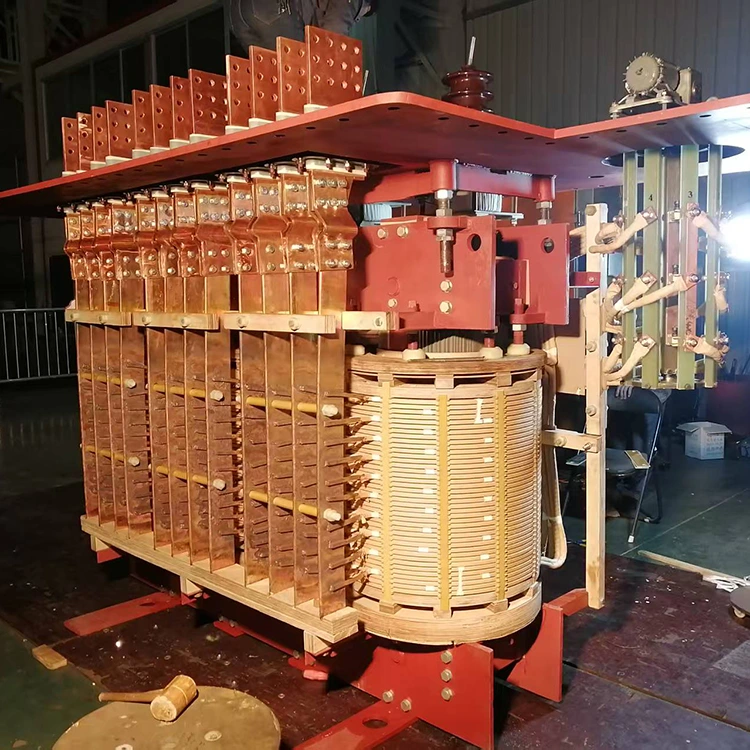
The secondary winding is usually split into multiple parallel paths to keep current density manageable. Transposed conductors are common in larger ratings, and the winding ends are carefully arranged so that current divides evenly between parallel strands. Uneven current sharing creates hot spots and shortens insulation life.
Impedance control
The impedance value is not selected from a fixed table. It comes from the furnace electrical study, which balances arc stability against the need to limit short-circuit stress. A higher impedance reduces current peaks but also lowers the power delivered to the arc. The transformer manufacturer adjusts winding geometry and leakage flux paths to meet the specified value within a narrow tolerance.
Series reactor option
Some installations include a series reactor, either inside the transformer tank or as a separate unit. This is more common when the grid is weak or when the early melting stage causes frequent scrap cave-ins. A built-in reactor saves space, but a separate reactor is easier to inspect and replace. The decision depends on site layout and maintenance philosophy.
Tap changer duty
Most arc furnace transformers use on-load tap changing. The tap changer operates far more often than in a power transformer because the furnace voltage must be adjusted between melting and refining. Thirteen to nineteen positions are typical, and the tap changer must be rated for frequent operation under load. Some projects specify a separate selector switch and diverter switch arrangement for longer contact life.
Cooling system selection
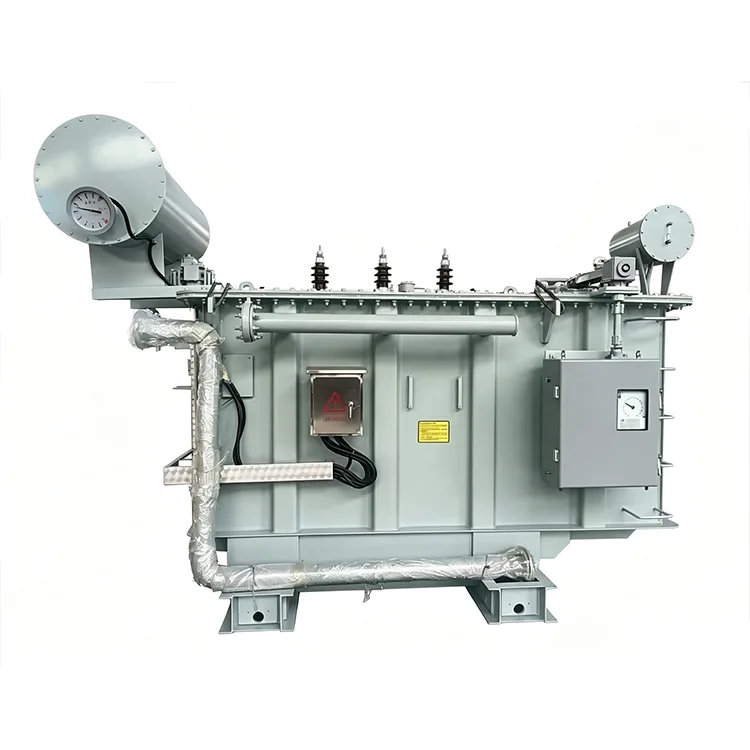
Small and medium units may use natural oil air natural cooling or forced air cooling. Large furnaces with high loss density often need forced oil water cooling. Water-cooled systems require strict pressure control: the oil pressure must always exceed the water pressure so that any leak moves from oil to water, not the reverse.
Specification Overview
The table below gives a general range of parameters for the arc furnace transformer series. Exact values are established during the design phase for each project.
|
Parameter |
Typical range |
|
Rated capacity |
1000 kVA to 80,000 kVA |
|
Primary voltage |
6 kV, 10 kV, 15 kV, 22 kV, 35 kV, or 110 kV |
|
Secondary voltage |
100 V to 800 V depending on furnace size |
|
Rated secondary current |
Up to approximately 70,000 A |
|
Short-circuit impedance |
6% to 12% |
|
Tap range |
13 to 19 positions typical |
|
Cooling method |
ONAN, ONAF, OFAF, or OFWF |
|
Voltage regulation |
Off-circuit or on-load tap changer |
|
Standards |
IEC 60076, GB/T 10229, and project-specific specifications |
Engineering Notes for Selection
Secondary voltage range
The secondary voltage range is determined by the furnace process and the melting profile. It is not a fixed value. The transformer designer works with the furnace builder to ensure that the lowest tap provides enough arc power during refining and the highest tap does not overstress the electrodes during meltdown.
Mechanical bracing
Repeated short-circuit forces cause winding movement and insulation wear. The clamping structure must hold the windings firmly without over-compressing the insulation. Some designs use pre-stressed tie rods and spring-loaded pressure plates to maintain clamping force over the life of the transformer.
Harmonic and power factor considerations
Arc furnace loads are non-linear and produce harmonics. The transformer itself does not eliminate these harmonics, but the winding design can include extra thermal margin to handle the additional losses. Power factor correction is usually handled separately at the furnace bus or the substation level.
Protection schemes
Arc furnace transformers require protection that can distinguish between normal operating transients and actual faults. Overcurrent relays must be set with enough delay to avoid tripping during electrode short circuits. Differential protection is common, but it must be coordinated with the frequent current swings of the furnace.
Production and Quality Verification
Yulan Transformer builds arc furnace transformers under controlled manufacturing conditions. Core laminations are cut and stacked with automated equipment. Windings are wound with transposed conductors where required and dried in a kerosene vapor phase vacuum system after assembly. The tank and external steel parts are shot-blasted and finished with powder coating for durability in industrial environments.
Every unit undergoes routine tests including winding resistance, voltage ratio, insulation resistance, power frequency withstand, induced overvoltage, no-load loss, load loss, and short-circuit impedance. Because of the severe operating duty, many customers also request short-circuit withstand calculations or type test verification. Tap changers are operated through a complete sequence before shipment to confirm reliable switching.
The company holds ISO 9001:2015, ISO 14001, and ISO 45001 certifications. Test records are archived by serial number and linked to material batches and production records for traceability.
Questions from Furnace Operators
How is the secondary voltage range established?
The furnace builder provides the required voltage curve for melting and refining. The transformer designer then selects tap positions so that the arc power matches the process requirements at each stage. Changing the voltage range after design approval usually requires reworking the winding arrangement.
What is the expected service life of an arc furnace transformer?
With proper maintenance and operation within design limits, many units remain in service for 20 to 30 years. The actual life depends on the number of furnace operations per day, tap changer duty, and the quality of the cooling system maintenance. Insulation aging is accelerated by frequent thermal cycling and mechanical vibration.
Can an arc furnace transformer be used for ladle refining?
In many cases yes, but the duty is different. Ladle refining furnaces operate at lower power and shorter cycles, so the thermal and mechanical stress is less severe. A transformer designed for a melting furnace may be oversized for ladle refining, but it can be used if the voltage range and impedance are suitable. The opposite is not always true.
What causes the loud noise during furnace operation?
The loud hum during melting comes from the high currents and the resulting electromagnetic forces in the windings and leads. The noise level is highest when the secondary current reaches its peak. Proper clamping and lead support reduce vibration, but some noise is inherent in arc furnace duty.
How often should the oil be tested?
Oil samples should be taken at least once a year for dissolved gas analysis. In heavy-duty service, more frequent sampling may be justified, especially if the transformer has experienced repeated short circuits or if the cooling system has shown signs of leaks. A rising trend in combustible gases indicates developing insulation stress and should be investigated.
Manufacturing Capability
The production facility supports arc furnace transformer manufacturing up to 110 kV class. Available resources include an 80-ton lifting capacity, a 400 kW kerosene vapor phase vacuum drying system, a 1,200 kV impulse test system, and a 400 kV partial discharge free power frequency test transformer. These capabilities allow the company to handle large core and coil assemblies and to perform the dielectric tests required for high-voltage furnace duty.
For a specific project, the technical department can provide a preliminary design based on the customer's single-line diagram and furnace data. This includes estimated dimensions, weight, loss calculations, and a tap voltage schedule. Contact Yulan Transformer for further discussion.
Related Category
Send Inquiry
Contact Info
-
Address
No. 20, Bai'e Road, Hecun Town, Jiangshan City, Zhejiang Province,CHINA
-
Tel
-
Email
Send specs for power, furnace or rectifier transformers and get a customized quotation and price list, direct from Yulan Transformer factory. Bulk orders welcome.
News Recommendations