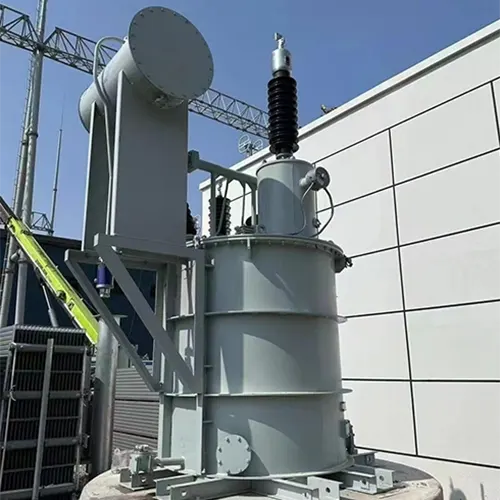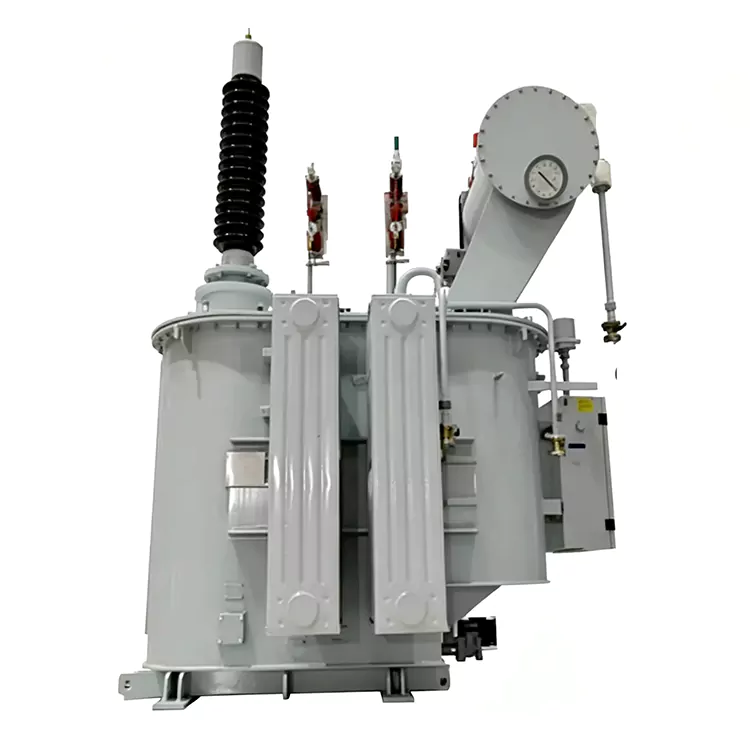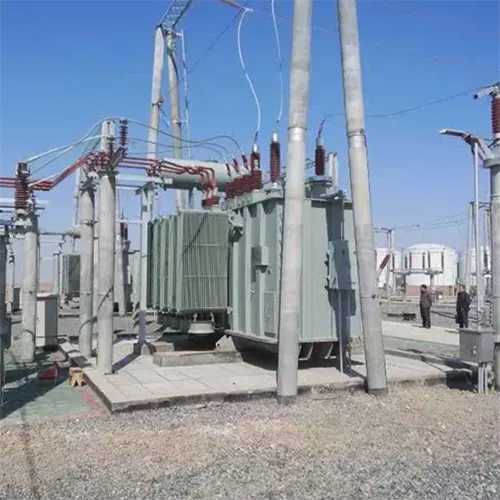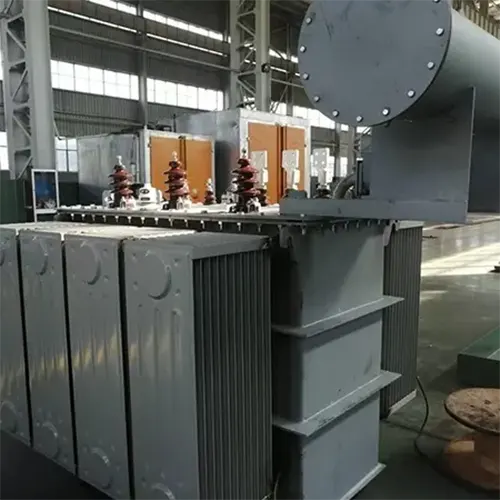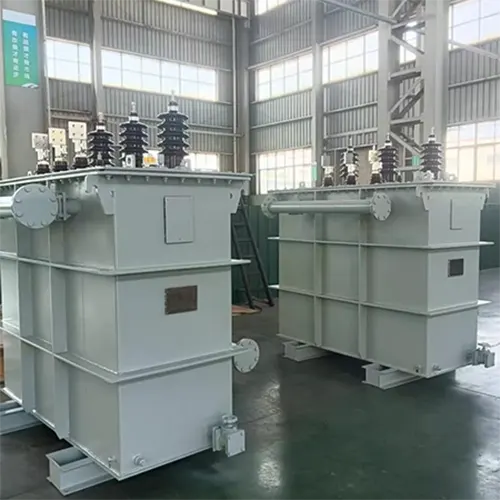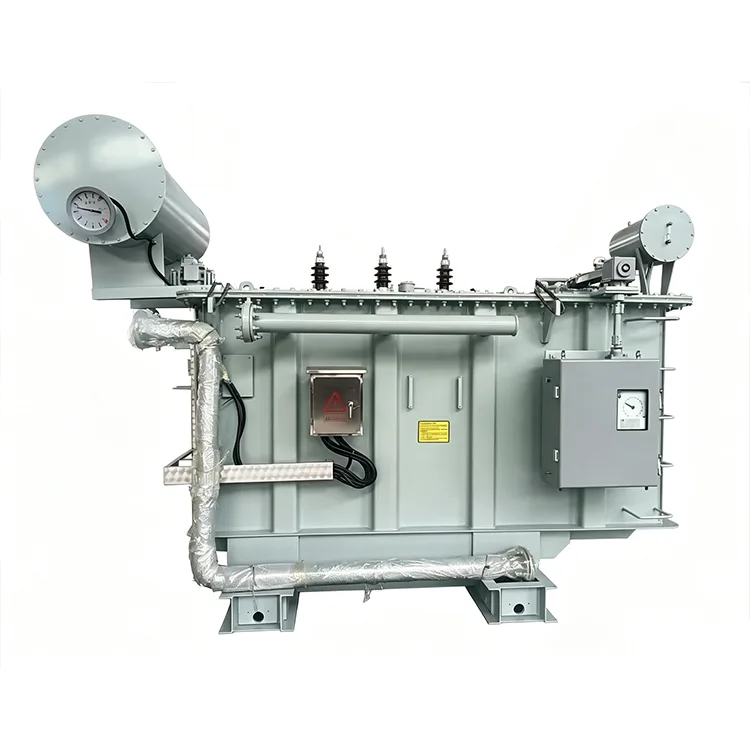
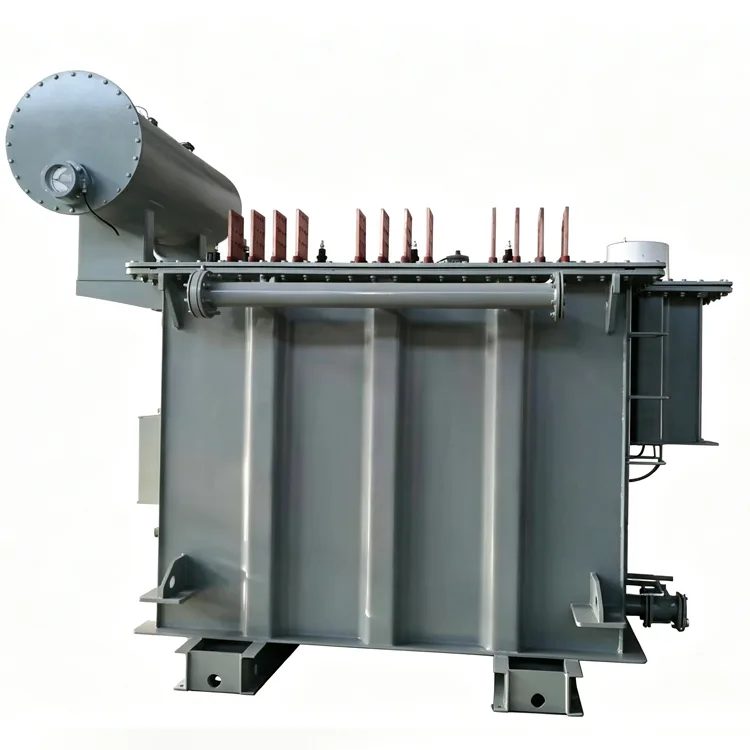
Ladle Refining Furnace Transformer
For secondary steel refining and precise temperature control, Yulan Transformer supplies Ladle Refining Furnace Transformers from 1,000 to 80,000 kVA. Primary voltages cover 6–110 kV, with customized secondary voltage and tap settings. Source reliable units, get pricing, or request a custom design.
Ladle refining is a secondary refining stage in the steelmaking process, situated between the primary melting furnace and continuous casting; its primary purpose is to adjust the composition, temperature, and purity of the molten steel. The Ladle Refining Furnace Transformer supplies electric arc heating power to this station, and its load characteristics differ significantly from those of melting arc furnaces.
Yulan Transformer designs and manufactures ladle refining furnace transformers as a specialized branch of its electric furnace transformer series. These units cover a capacity range of 1,000 kVA to 80,000 kVA, support primary voltages of 6 kV, 10 kV, 15 kV, 22 kV, 35 kV, and 110 kV, and feature secondary voltages and voltage regulation steps tailored to specific refining process requirements.
Differences Between Refining Conditions and Melting Furnaces
Ladle furnaces process molten steel, with the electric arc burning between the electrodes and the melt; consequently, the furnace is not subjected to the violent short-circuit shocks caused by collapsing scrap metal. As a result, the mechanical stress on the windings is lower than that experienced by melting arc furnace transformers, although voltage regulation operations occur much more frequently. During refining, input power must be continuously adjusted based on the steel grade and target temperature; the on-load tap changer operates far more often than in standard power transformers — sometimes dozens of times a day.
Secondary voltages are generally lower than those of melting arc furnaces, typically ranging from 90 V to 240 V, while secondary currents range from several thousand to tens of thousands of amperes, depending on capacity. Due to the relative stability of the arc, short-circuit impedance can be slightly lower than that of melting furnaces, though it must still be kept within a reasonable range to ensure arc continuity and equipment safety. Design impedance values typically fall between 6% and 10%, with the exact figure determined jointly by the furnace manufacturer and the electrical system designer.
Range of key technical parameters
|
Item |
Parameter range |
|
Executive Standard |
IEC 60076 series, GB/T 10229, JB/T 9640 and user technical agreement |
|
Rated Capacity |
1000 kVA to 80000 kVA |
|
Primary Rated Voltage |
6 kV, 10 kV, 15 kV, 22 kV, 35 kV, 110 kV |
|
Secondary Voltage Range |
90 V to 260 V, segmented by refining process |
|
Number of Voltage Regulation Steps |
Level 4 to level 19, commonly used levels 5 to 8 |
|
Rated Frequency |
50Hz/60Hz |
|
Number of Phases |
Three phases |
|
Vector Group |
Dd0, Yd11, D-Yd0-11, D-YdD-11, etc. |
|
Short-circuit Impedance |
6% to 10%, based on the highest secondary voltage |
|
Cooling Method |
ONAN, ONAF, OFAF or OFWF, depending on capacity and loss density |
|
Voltage Regulation Method |
Non-excitation electric or on-load voltage regulation |
Excerpt of Representative Model Data
The following data is compiled from factory records of products already supplied; only selected specifications are listed for reference. External dimensions and weight vary depending on the specific configuration; final specifications are subject to the factory documentation.
|
Model |
Rated Capacity (kVA) |
Primary Voltage (kV) |
Secondary Voltage (V) |
Vector Group |
Number of Voltage Regulation Taps |
Weight of Active Part (kg) |
Total Weight (kg) |
|
HBSSP-2000/6 |
2000 |
6 |
185-150 |
Dd0 |
4 |
3050 |
8000 |
|
HBSSP-2400/10 |
2400 |
10 |
200-104 |
D-Yd0-11 |
6 |
3550 |
9230 |
|
HBSSP-3150/10 |
3150 |
10 |
210-150 |
Yd11 |
5 |
5500 |
10600 |
|
HBSSP-3200/35 |
3200 |
35 |
210-98 |
D-Yd0-11 |
6 |
6480 |
14200 |
|
HBSSP-5000/10 |
5000 |
10 |
210-121 |
D-YdD-11 |
5 |
7030 |
14500 |
|
HBSSP-6300/35 |
6300 |
35 |
215-155 |
Yd11 |
5 |
9500 |
19000 |
|
HBSSP-8000/35 |
8000 |
35 |
240-155 |
Yd11 |
5 |
10900 |
22000 |
Note: The primary voltage can be designed as 20 kV, 60 kV, or 110 kV according to user requirements; in such cases, the insulation level and external dimensions will be adjusted accordingly.
Voltage Regulation and Impedance Design
Ladle Refining Furnace Transformers typically feature fewer voltage regulation steps than melting arc furnaces, as the refining stage does not require covering the full power range from initial arcing to melting. Common configurations range from 5 to 8 steps; however, some large refining furnaces requiring finer voltage control may utilize 13 to 19 steps with on-load tap changing. The on-load tap changer selected must be suitable for frequent operation, with contact lifespan and switching speeds aligned with the refining cycle.
The selection of short-circuit impedance must balance arc stability with system short-circuit current limitations. Since the arc in a ladle furnace is relatively stable, the impedance can be slightly lower than that of a melting arc furnace; however, if the grid's short-circuit capacity is insufficient, a series reactor may be required, or the transformer impedance may need to be increased. Target values are determined through electrical system calculations during the design phase, and the manufacturer achieves these specifications through winding arrangement and leakage flux control.
Secondary Connections and Structural Features
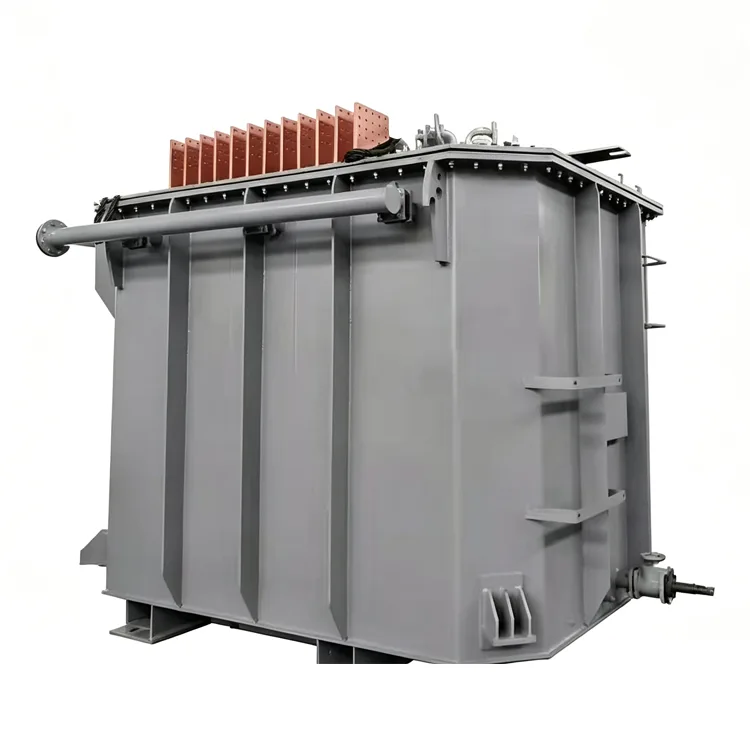
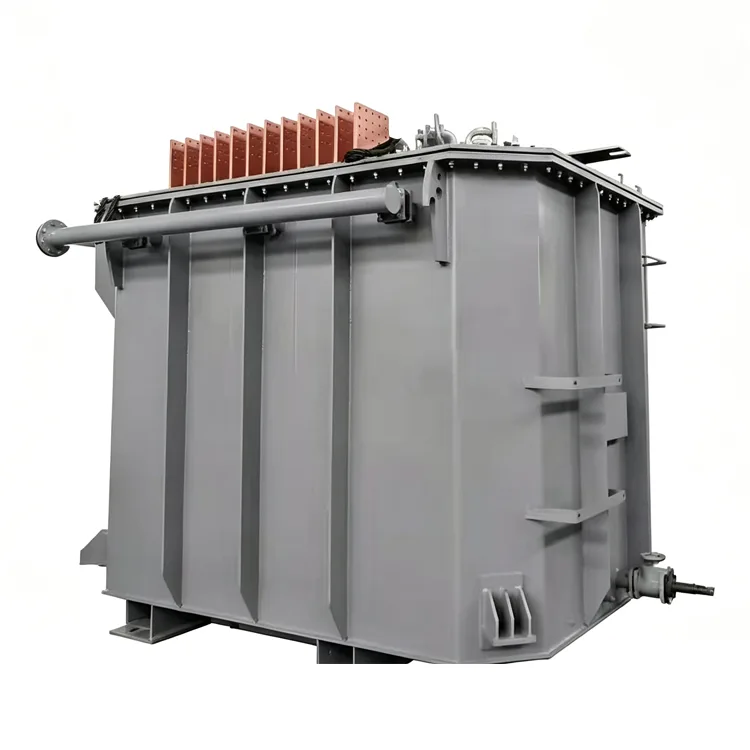
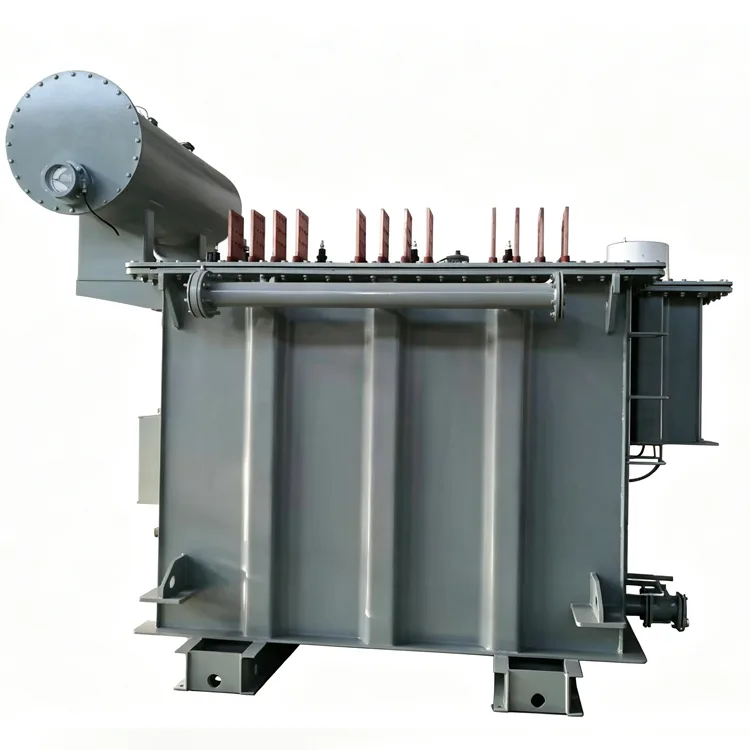
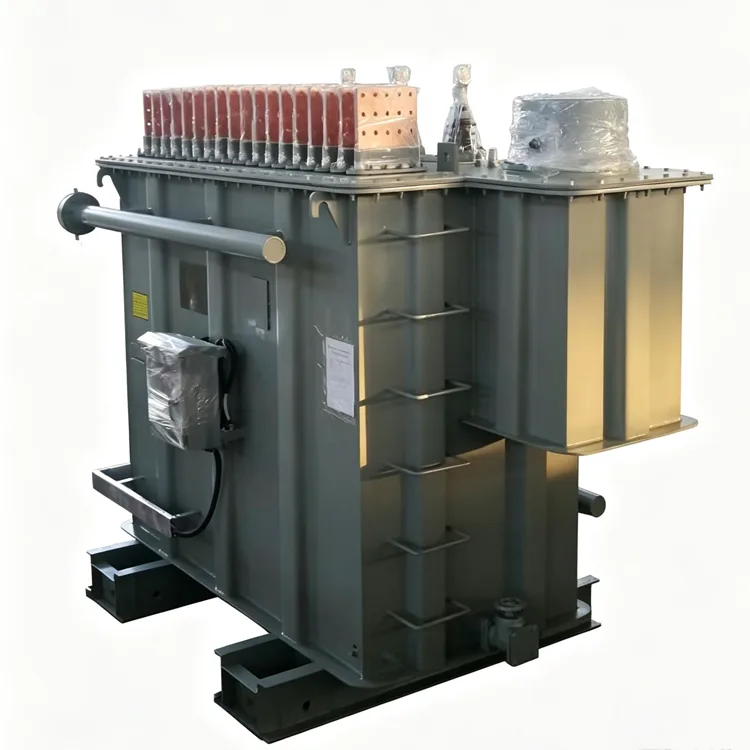
Given the high secondary current, the output connections utilize multiple copper busbars in parallel, with terminal boards mounted on the tank wall. Some models employ an in-phase inverse-parallel arrangement, causing currents in adjacent busbars to flow in opposite directions, thereby reducing external magnetic fields and heating in structural components. Internally, transposed conductors or multiple parallel conductors are used within the windings to ensure uniform current distribution across all branches.
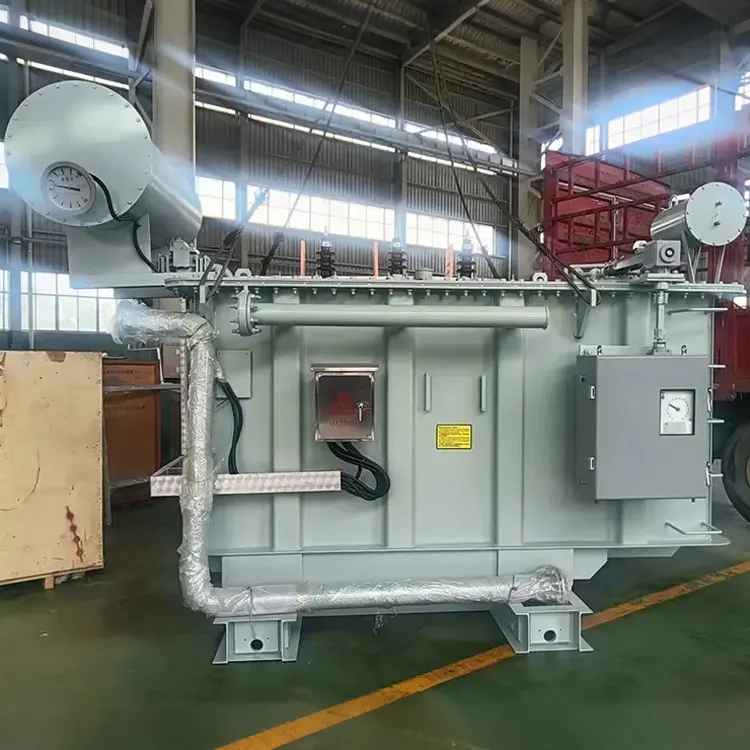
The tank features either a bell-type or cover-type structure, depending on capacity and maintenance requirements. Large units are equipped with radiator panels or forced oil circulation cooling systems. The active part undergoes drying in a kerosene vapor vacuum system to thoroughly remove moisture and gases from the insulation components.
Quality Verification
Before leaving the factory, each unit undergoes measurements for winding DC resistance, voltage ratio, insulation resistance, power-frequency withstand voltage, induced withstand voltage, no-load loss, load loss, and short-circuit impedance. The on-load tap changer undergoes a full operational cycle test. For units rated at 35 kV and above, additional lightning impulse tests and partial discharge measurements are conducted. The company holds ISO 9001:2015, ISO 14001, and ISO 45001 certifications, and test data is archived by serial number.
Selection Q&A
Q: Can ladle furnace transformers and electric arc furnace (EAF) transformers be used interchangeably?
While they share the same structural principles, their design priorities differ. Melting EAF transformers must withstand more severe short-circuit shocks; thus, they typically feature higher impedance and a wider voltage regulation range. Ladle furnace transformers operate with a more stable arc, allowing for slightly lower impedance and fewer voltage regulation steps. If a user requires dual-purpose capability in the short term, parameters such as impedance, voltage regulation range, and mechanical strength must be re-verified; direct substitution is not feasible.
Q: Is it better to choose 5 voltage regulation steps or 8?
It depends on the steel grades being refined and the process curves. Refining ordinary carbon steel places fewer demands on voltage regulation, so 5 steps are usually sufficient. Refining alloy steel or stainless steel requires finer power control, making 8 or more steps preferable. Increasing the number of steps raises the cost of the tap changer and the size of the transformer tank but improves temperature control precision.
Q: How is the secondary voltage range determined?
It is specified by the furnace manufacturer based on ladle capacity, electrode diameter, and the refining process. The transformer designer then translates this secondary voltage range into specific winding turn counts and tap positions. Users must provide the complete voltage curve during the initial project phase; modifications made later would necessitate a redesign of the windings.
Q: How should the cooling method be selected?
For capacities below 5,000 kVA, natural oil cooling or air cooling usually suffices. Above 10,000 kVA, loss density increases, so forced oil circulation with air cooling or water cooling is recommended. Water cooling systems require more maintenance; specifically, the oil pressure must be kept higher than the water pressure at all times to prevent water from leaking into the oil.
Q: Does a ladle furnace transformer require a series reactor?
It depends on the power grid's short-circuit capacity and the refining process. Most ladle furnace transformers are designed with impedance already set within an appropriate range, eliminating the need for an additional reactor. However, if the local grid is weak or multiple furnaces operate in parallel at the steel plant, a reactor may be installed to limit short-circuit current and stabilize the arc. Engineering Capabilities
Yulan Transformer has been manufacturing electric furnace transformers since 1999, with ladle refining furnace transformers supplied in volume to numerous domestic steel mills. Our production facilities feature an 80-ton lifting capacity, a 400 kW kerosene vapor-phase vacuum drying system, 1,200 kV impulse testing equipment, and a 400 kV partial-discharge-free power-frequency test transformer; these capabilities enable us to meet manufacturing and factory acceptance testing requirements for ladle furnace transformers rated at 110 kV and below.
For projects with capacities ranging from 1,000 kVA to 80,000 kVA and primary voltages between 6 kV and 110 kV, our technical department can develop design solutions based on customer-provided single-line diagrams and refining process parameters, supplying outline drawings, loss calculations, and voltage regulation schedules. Please contact the Yulan Transformer technical department for detailed information.
Related Category
Send Inquiry
Contact Info
-
Address
No. 20, Bai'e Road, Hecun Town, Jiangshan City, Zhejiang Province,CHINA
-
Tel
-
Email
Send specs for power, furnace or rectifier transformers and get a customized quotation and price list, direct from Yulan Transformer factory. Bulk orders welcome.
Related Products
News Recommendations