Dry-Type Grounding Transformer
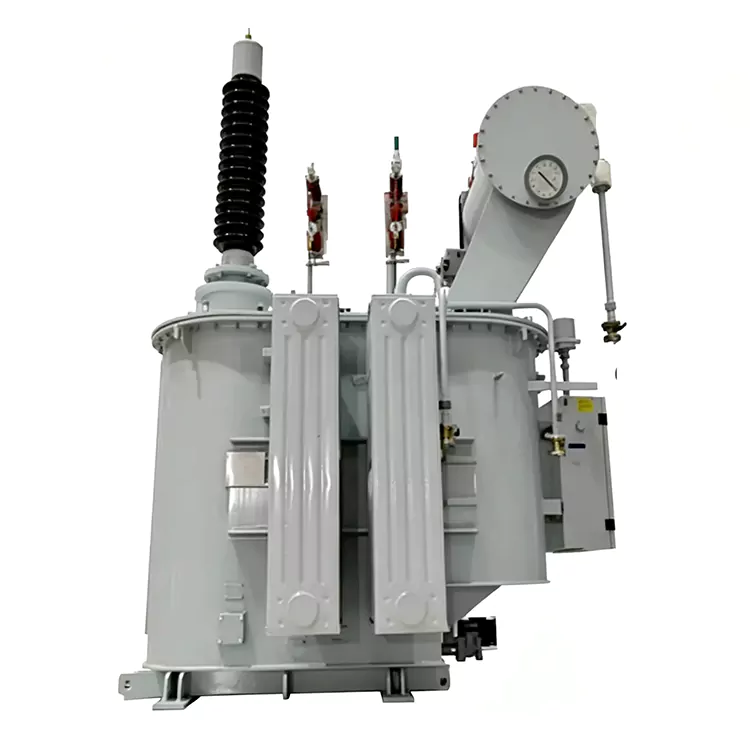
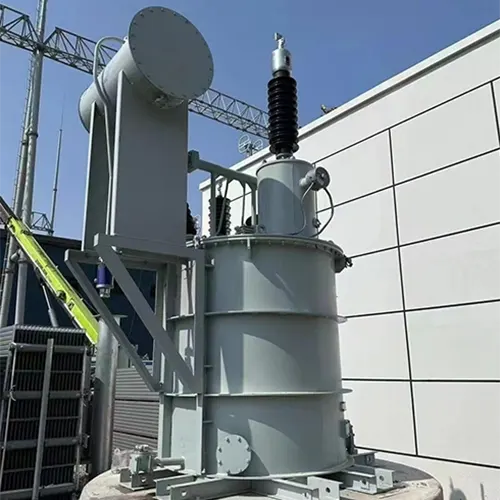
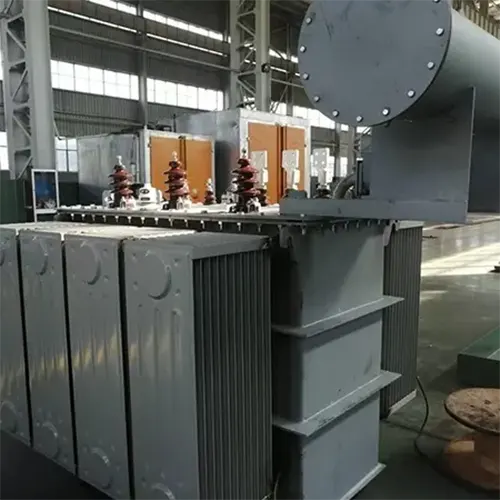
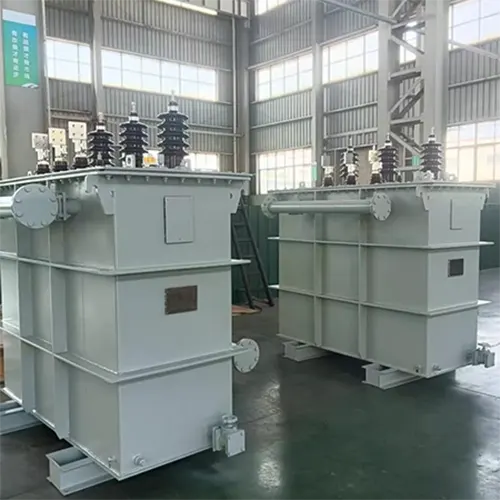
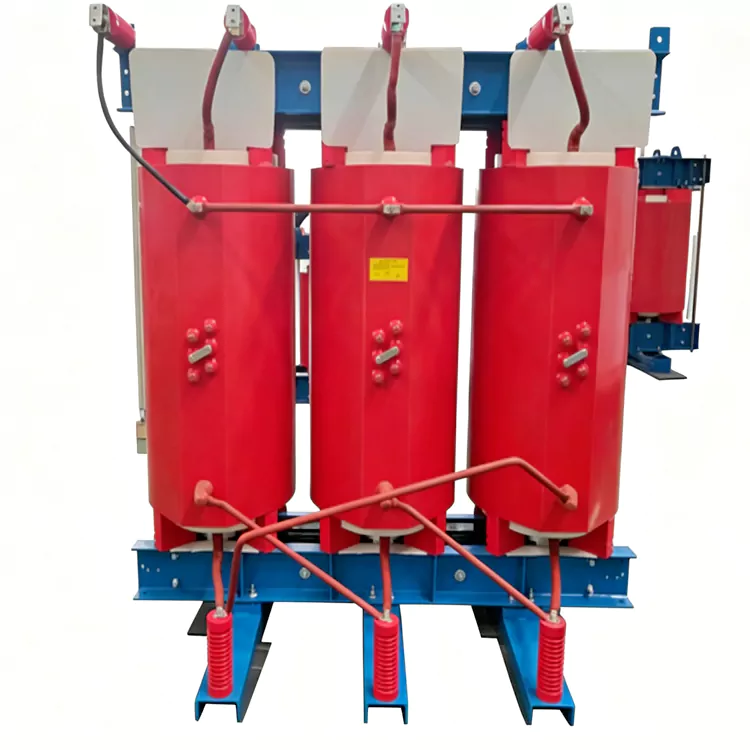
Jiangshan Yulan Transformer Co., Ltd. manufactures dry-type grounding transformers suitable for 6–35 kV distribution networks. Their zigzag windings provide an artificial neutral point for arc-suppression coils or grounding resistors. As oil-free and flame-retardant units, they are ideally suited for indoor substations.
Jiangshan Yulan Transformer Co., Ltd. produces dry-type grounding transformers for 6–35 kV medium-voltage distribution networks. The unit uses epoxy resin vacuum casting and a zigzag (Z) winding to create a stable neutral point where the system has none. It provides a grounding connection for arc suppression coils, neutral grounding resistors, and protective relays.
The transformer is oil-free, flame-retardant, and suitable for indoor substations, urban distribution networks, industrial plants, and renewable energy step-up stations.
Product Overview
The dry-type grounding transformer, commonly DKSC series, is a special-purpose transformer for small-current grounding systems. It is designed for three-phase three-wire networks where no natural neutral point is available.
The zigzag winding creates an artificial neutral point. This neutral point can be connected to an arc suppression coil for capacitive current compensation, or to a grounding resistor for current-limited tripping. The transformer can also supply station auxiliary loads when required.
The dry-type construction removes oil leakage and fire risk. It is maintenance-free under normal conditions and suitable for compact indoor installation.
Working Principle
In a 6–35 kV three-phase three-wire system, the transformer and lines usually have no directly accessible neutral point. Grounding compensation devices such as arc suppression coils or grounding resistors cannot be connected directly.
The dry-type grounding transformer uses a zigzag winding. The magnetic circuit is symmetrical, and the zero-sequence impedance is very low. Under balanced three-phase operation, the transformer has little effect on the system.
When a single-phase ground fault occurs, the zigzag winding provides a low-impedance path for zero-sequence current. A stable neutral point voltage appears. This allows the arc suppression coil to compensate capacitive current and extinguish the arc, or allows the grounding resistor to limit fault current for selective tripping. The neutral point signal is used by protective relays to isolate the faulted feeder.
Construction
|
Part |
Description |
|
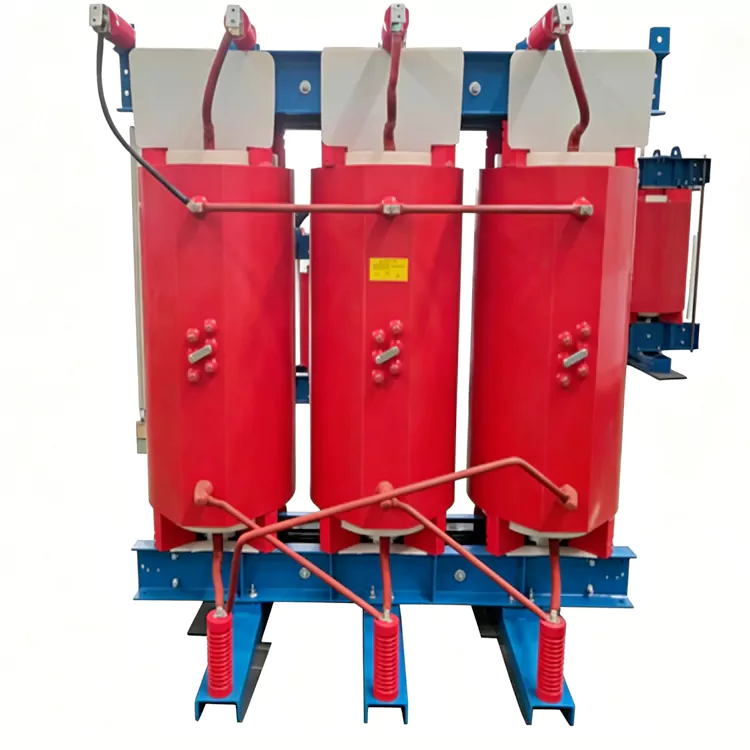
Core |
Cold-rolled silicon steel, stacked core, optimized magnetic circuit for low no-load loss and low noise |
|
Zigzag winding |
Segmented and displaced winding arrangement; low zero-sequence impedance; high zero-sequence current capability; copper conductors |
|
Insulation |
Vacuum epoxy resin casting; F/H class insulation; rigid body; moisture-proof, dust-proof, anti-pollution |
|
Cooling |
Natural air cooling (AN); forced air cooling (AF) for larger capacities |
|
Temperature monitoring |
Winding temperature sensors; alarm and trip contacts; over-temperature protection logic |
|
Accessories |
High-strength insulating supports, vibration-damping base, HV bushings, grounding terminals |
Technical Data
|
Parameter |
Range or description |
|
Rated voltage |
6 kV, 10 kV, 35 kV |
|
Type |
Dry-type, epoxy cast, zigzag (Z) winding |
|
Rated capacity |
50–2500 kVA (grounding duty); station load optional |
|
Frequency |
50 Hz / 60 Hz |
|
Zero-sequence impedance |
Low, project-specific |
|
Insulation class |
F / H |
|
Cooling |
AN / AF |
|
Temperature rise |
According to GB / IEC |
|
Protection degree |
IP20, IP23, or as specified |
|
Installation |
Indoor; outdoor with enclosure |
|
Standards |
GB 1094.11, IEC 60076-11, DL/T |
Selection Guide
|
Input |
Why it matters |
|
System voltage and frequency |
Determines insulation level and basic design |
|
Grounding method |
Arc suppression coil, grounding resistor, or direct grounding |
|
Required neutral point current |
Sets the grounding capacity |
|
Zero-sequence impedance |
Affects protection sensitivity and fault current |
|
Station load requirement |
Determines whether auxiliary winding is needed |
|
Fault duration |
Determines thermal capacity |
|
Installation environment |
Indoor or outdoor, altitude, pollution level |
|
Protection and monitoring |
Temperature monitoring, relay coordination |
The transformer capacity is selected from the required neutral point current and the duration of the ground fault. If station load is required, the capacity is based on the larger of the grounding duty and the continuous load.
Dry-Type vs Oil-Immersed Grounding Transformer
|
Item |
Dry-type grounding transformer |
Oil-immersed grounding transformer |
|
Insulation |
Epoxy cast |
Transformer oil |
|
Fire safety |
No oil, flame-retardant |
Oil fire risk |
|
Maintenance |
Low maintenance |
Periodic oil tests |
|
Installation |
Indoor, compact |
Outdoor, oil pit required |
|
Environmental impact |
No oil leakage risk |
Oil leakage and disposal |
|
Typical use |
Indoor substations, urban networks, industrial plants |
Outdoor substations, large capacity |
Coordination with Arc Suppression Coil and Resistor
The dry-type grounding transformer provides the neutral point for the grounding compensation device. The arc suppression coil is connected between the neutral point and ground. During a single-phase ground fault, the coil supplies inductive current to compensate the capacitive current of the network. The grounding transformer must have low zero-sequence impedance so that the compensation current is not restricted.
For resistor grounding systems, the resistor is connected between the neutral point and ground. The transformer zero-sequence impedance affects the fault current level and must be coordinated with the resistor value and relay settings.
Typical Applications
6–35 kV indoor substations and urban distribution networks
Industrial plants and commercial buildings with three-phase three-wire supply
Renewable energy step-up stations
Systems using arc suppression coils for resonant grounding
Systems using neutral grounding resistors for current-limited tripping
Retrofitting existing ungrounded systems to create a neutral point
Standards and Testing
The transformer is designed and tested according to GB 1094.11, IEC 60076-11, and relevant DL/T standards. Routine tests include winding resistance, insulation resistance, power frequency withstand voltage, partial discharge, and no-load and load loss. Type tests are available on request.
Manufacturing and Quality Control
Jiangshan Yulan Transformer Co., Ltd. has manufactured transformers since 1999. The company operates ISO 9001:2015, ISO 14001:2015, and ISO 45001:2018 management systems. Products are tested by the National Transformer Product Testing Center of China where required.
Production and testing equipment includes vacuum casting systems, vacuum drying systems, impulse test equipment, PD-free power frequency withstand voltage test transformers, core cutting lines, winding machines, and hydraulic presses.
FAQ
Q: What is the difference between a grounding transformer and a neutral grounding reactor?
A: A grounding transformer creates an artificial neutral point where none exists. A neutral grounding reactor is connected between an existing neutral point and ground to limit fault current and damp resonance. They perform different functions and are often used in different parts of the system.
Q: Can the dry-type grounding transformer supply station loads?
A: Yes. A secondary winding can be added to supply station auxiliary loads. The capacity is selected from the larger of the grounding duty and the continuous load.
Q: Why is the zigzag winding used?
A: The zigzag winding provides a low zero-sequence impedance path. This allows sufficient zero-sequence current to flow during a ground fault, so the arc suppression coil or grounding resistor can operate correctly.
Q: How is the zero-sequence impedance determined?
A: It is calculated from the required neutral point current, the grounding device impedance, and the protection settings. The transformer design is adjusted to meet the specified zero-sequence impedance.
Q: Can it be used with an arc suppression coil?
A: Yes. It is commonly used with an arc suppression coil in resonant grounding systems. The transformer provides the neutral point, and the coil compensates the capacitive fault current.
Q: Is it suitable for outdoor installation?
A: The standard design is for indoor installation. For outdoor use, an enclosure with the required protection degree is provided.
Q: What maintenance is required?
A: Dry-type grounding transformers require periodic visual inspection, cleaning, and temperature monitoring. No oil testing is needed.
Q: Are 50 Hz and 60 Hz designs available?
A: Yes.
Q: What information is needed for a quotation?
A: System voltage, frequency, grounding method, required neutral point current, zero-sequence impedance, station load requirement, fault duration, indoor or outdoor installation, altitude, pollution level, protection and monitoring requirements, and project schedule.
Related Category
Send Inquiry
Contact Info
-
Address
No. 20, Bai'e Road, Hecun Town, Jiangshan City, Zhejiang Province,CHINA
-
Tel
-
Email
Send specs for power, furnace or rectifier transformers and get a customized quotation and price list, direct from Yulan Transformer factory. Bulk orders welcome.
Related Products
News Recommendations